Some names in the guitar world became famous.
Abigail Ybarra became legendary.
For more than five decades, Abigail quietly shaped the sound of Fender. She didn’t tour, she didn’t promote, and she never tried to turn herself into a brand. She simply walked into the Fender factory, day after day, and wound the pickups that defined the most influential electric-guitar tones ever recorded.
If you’ve listened to rock, blues, soul, country, funk, gospel, or anything built on the sound of a Strat or Tele, you’ve heard her work.
A Career That Spanned the Golden Eras
Abigail joined Fender in 1956, the peak of Leo Fender’s original era. She stayed through CBS, post-CBS, the early Custom Shop, and the first decades of the modern boutique explosion. Very few people in the guitar industry worked that long, that consistently, at that level.
She wound pickups for artists who shaped entire genres. She built sets that went into Custom Shop guitars players still chase today. And she did it all without hype, fanfare, or a spotlight.
Why Players Still Seek Out Her Work
Abigail belonged to the generation of winders who relied on their own hands. Her coils were wound by feel.
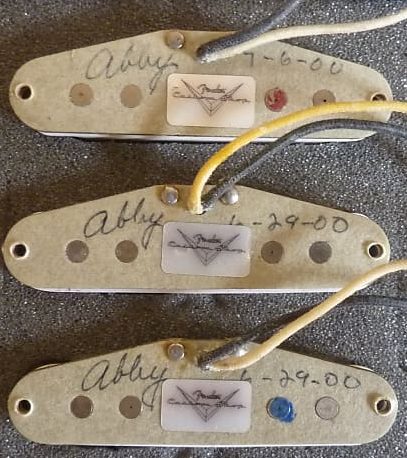
This is why collectors hunt for her signature.
This is why studios still keep “Abby sets” in reserve.
This is why serious players say her pickups feel alive.
Prices for Abby Pickups
$2600 ABBY WOUND STRAT PICKUPS
$2000 ABBY WOUND STRAT PICKUPS
$2000 ABBY WOUND STRAT PICKUPS
$750 ABBY LEGEND SERIES PICKUPS
The End of an Era
When she retired from Fender, an entire chapter of guitar history closed with her. No more hand-wound sets. No more signed coils. No more pickups touched by one of the last true masters of the original Fender lineage.
What she left behind is finite, and because of that, the demand has only grown.
Her pickups are no longer just components.
They’re artifacts.
They’re history you can still hear.
A Legacy That Lives in the Hands of Players
Abigail Ybarra never acted like she was building something iconic. She simply showed up and did the work — every coil, every turn, every signature.
She didn’t need a brand.
The players created one for her.
Today, her name stands alongside the most respected winders to ever touch a pickup. Her influence is woven into the DNA of the modern boutique movement. And every time someone plugs in a Strat or Tele loaded with her work, that sound carries her story forward.
This page is dedicated to that story — the woman behind the tone that shaped generations
 Abby Pickup Info